Residential Proxies Explained with Practical Uses and Pricing Insights
· based on the channel Lukas Margerie
Key takeaways
- Residential proxies route traffic through real home ISP connections to avoid detection.
- VPNs use data center IPs often flagged by websites, unlike residential proxies.
- Rotating residential proxies assign a fresh IP per request for better anonymity.
- Residential proxies enable geo-targeting to access localized pricing and content.
- DataImpulse offers a leading residential proxy network optimized for web scraping.
Residential proxies are specialized proxy servers that route your internet requests through real residential IP addresses provided by home internet service providers. Unlike traditional VPNs that use data center IPs often flagged by websites, residential proxies appear as genuine local users, making them invaluable for tasks such as web scraping, geo-targeting, and uncovering hidden regional pricing.
What Are Residential Proxies and How Do They Work
Residential proxies assign each web request an IP address from a pool of real residential devices. These IPs originate from actual home internet connections, which means websites perceive the traffic as coming from ordinary users rather than automated scrapers or VPN services. This reduces the risk of IP bans and CAPTCHAs during large-scale data gathering.
Key characteristics include:
- Authenticity: IPs linked to real residential ISPs.
- Geo-targeting: Ability to select IPs from specific countries or regions.
- Rotation: Many providers offer rotating IPs giving a fresh exit IP on every connection, enhancing anonymity.
VPN vs Residential Proxy: Why Residential Proxies Are Preferred for Web Scraping
Virtual Private Networks (VPNs) route all traffic through centralized data center servers. These IPs are easily recognized and often blocked by websites trying to prevent automated access or regional price scraping. In contrast, residential proxies send each request through a unique residential IP, making detection much harder.
Advantages of residential proxies over VPNs:
- Lower risk of being blocked or flagged.
- More accurate geo-location for localized content.
- Ability to rotate IPs dynamically for continuous scraping.
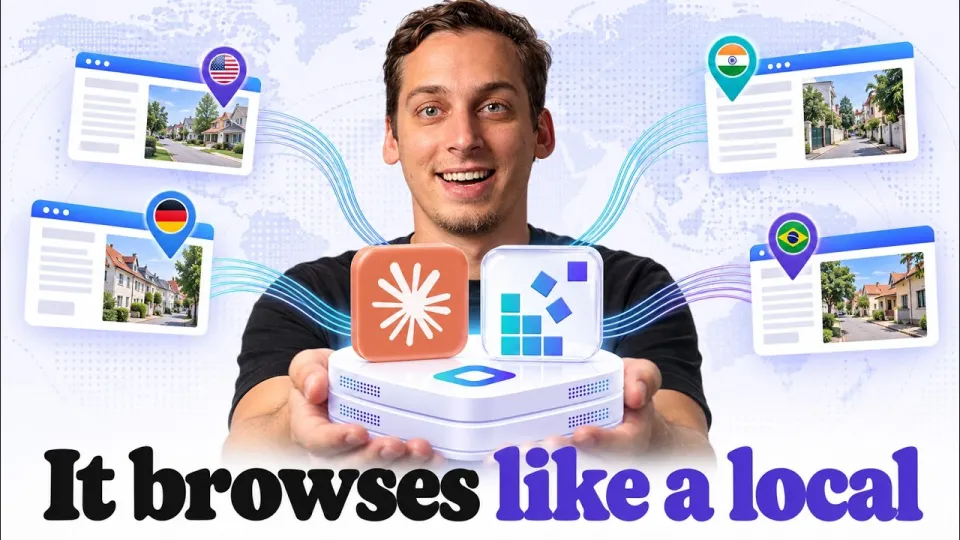
Video: This Claude Code Agent Uses Residential Proxies to Find Hidden Prices
Practical Uses of Residential Proxies for Price Comparison and Geo-targeting
Residential proxies enable applications that require accessing region-specific data. For example, many SaaS and streaming platforms like Spotify, Canva, ChatGPT, and Netflix offer different prices depending on the country. By using residential proxies, one can automate the retrieval of pricing pages from various countries and compile a comprehensive price comparison without manual VPN switching.
This technique helps businesses and consumers:
- Detect hidden regional price discrepancies.
- Analyze geo-targeted marketing and pricing strategies.
- Bypass geo-restrictions to view localized content.
Rotating Residential Proxies: Enhancing Scraping Efficiency
Rotating proxies change the outgoing IP address with every request or after a set time interval. This feature is crucial when scraping large amounts of data, as it minimizes the chance of IP bans and CAPTCHAs. Residential proxy providers like DataImpulse offer robust rotating proxy networks with easy country targeting by appending suffixes to usernames.
Steps to use rotating residential proxies:
- Choose desired country or region.
- Configure proxy rotation settings.
- Integrate with scraping tools like Playwright or AI agents such as Claude Code.
- Collect data seamlessly with minimal interruptions.
Tools and Technologies Leveraging Residential Proxies
An example of innovative use is the Claude Code agent, which combines AI-powered automation with residential proxies to scrape pricing data from multiple countries simultaneously. Technologies involved include:
- DataImpulse residential proxy network for authentic IPs.
- Claude Code AI agent for prompt-driven automation.
- Playwright for browser automation and scraping.
These tools enable efficient, scalable scraping workflows that reveal detailed pricing teardowns across regions without manual VPN management.
Addressing Common Questions About Residential Proxies
Many users wonder about the price differences uncovered by residential proxies, which can be surprisingly large. For instance, Spotify Premium costs about $12.99/month in the US but only around $1.45 in India. Canva Pro and other SaaS products show similar regional pricing gaps.
Common concerns include:
- How to choose the best residential proxy provider.
- The legality and ethics of using residential proxies.
- The technical setup required for rotating proxies.
- Understanding differences between VPNs and proxies for specific use cases.
Useful Links
- DataImpulse residential proxies for registration and trial: https://dataimpulse.com/?utm_source=youtube&utm_medium=video&utm_campaign=lukasmargerie
- Claude Code AI agent: https://www.claude.com/product/claude-code
- Playwright browser automation: https://playwright.dev
- CreatorNTWRK Discord: https://discord.com/invite/vZxn6wZrDD
- BuilderzGym Skool: https://www.skool.com/builderzgym
Conclusion
Residential proxies are a powerful technology for accessing geo-targeted content and uncovering hidden regional pricing without the limitations of VPNs. By routing traffic through real home ISP connections, they reduce detection and enable efficient web scraping at scale. Tools like Claude Code paired with DataImpulse proxies demonstrate innovative applications in pricing analysis and SaaS market research. For those interested in exploring residential proxies, visiting DataImpulse’s site provides a straightforward starting point. This analysis is based on insights from Lukas Margerie’s detailed breakdown of residential proxies and their practical use cases.
Source: This Claude Code Agent Uses Residential Proxies to Find Hidden Prices · Markdown version
Questions & answers
What is the main difference between a VPN and a residential proxy?
A VPN routes all your traffic through data center IPs associated with centralized servers, which websites often flag. Residential proxies use real home ISP IP addresses, making your traffic appear as if it's coming from a local user, reducing the chance of detection.
How do rotating residential proxies improve web scraping?
Rotating residential proxies assign a new IP address for every connection or request, minimizing the risk of IP bans and CAPTCHAs during large-scale data collection, ensuring more reliable and continuous scraping.
Why do prices for services like Spotify or Canva differ so much by country?
Many SaaS and streaming companies use regional pricing strategies based on local market conditions, purchasing power, and competition. Residential proxies help reveal these hidden prices by accessing the service from different geographical IPs.
Is using residential proxies legal and ethical?
Using residential proxies is legal as long as it's done within the terms of service of the websites accessed and complies with regional laws. Ethical considerations include respecting website policies and avoiding data misuse or unauthorized access.